
Every entrepreneur appreciates the value of creating a positive working environment. But while most will pay a great deal of attention to shop floors and offices, the manufacturing factories are often left unloved. Given that this is where products are physically made, it’s about time you gave this workspace the attention it deserves.
Success in the manufacturing plant can breed success throughout the business. While it is a fast-paced and hectic environment, you can gain control of the situation with relative ease. Focus on the eight great pointers below, and you should see positive results in no time.
#1. Invest In The Right Staff & Training
Good employees provide the foundation for success in every working environment. And the factory shouldn’t be any different. Skilled and semi-skilled workers have a huge role to play. After all, the speed of their workflow will set the tone for productivity every single day.
It doesn’t matter whether you’re hiring machine operatives, forklift drivers, foremen, or laborers. Don’t just look at their qualifications. Pay attention to their personality traits. After all, their natural motivation, as well as their communication with colleagues, will be telling. This is a team that must work together at all times.
The recruitment process can be handled directly or via an agency. Either way, it’s important to invest in staff training too. This will allow them to keep developing, become familiar with new equipment, and maintain motivation levels. With a strong team at your disposal, all subsequent successes will gain even greater results.
#2. Focus On Safety
Safety is paramount in all workspaces. Nonetheless, the potential hazards of working with machinery are even more significant. Whether it’s fire hazards, electrical dangers, blades, chemicals, or dangerous machinery doesn’t matter. You must not overlook the safety for a second.
Prevention is the best form of protection. As such, you should provide all employees with the hard hats, safety goggles, gloves, and work boots needed to remain safe. Crucially, you must install an alarm notification system that will alert all workers to emergencies within this arena. The best facilities will utilise both lights and sound alarms.
It is equally crucial to establish a clear safety protocol, so that all employees know how to evacuate the area in an emergency. This should be supported by the appropriate signage. Examples include warnings of wet floors, low ceilings, upcoming drops, and other hazards. When safety is under control, your team can focus on the work at hand.
#3. Invest In Automation
The value of skilled workers should never be underestimated. Nonetheless, business technology has evolved at a rapid rate in recent generations. Machines will always need someone to operate them and oversee the work. Still, it would be madness to persist with outdated equipment any longer.
In many cases, it is actually possible to use a ‘lights out’ machine that doesn’t even need a human to operate it. Even if you don’t take this option, robotics has become more affordable. Now is the time to implement the equipment for sorting items, assembly, and other parts of the production line. If nothing else, it ensures all products are built to uniform standards without inferior goods.
Automation can be used for virtually any field of manufacturing. Whether it’s building the body of a car or using robotic sewing machines to recreate designs doesn’t matter. If a machine can remove the threat of human error, it is a worthwhile investment. It’ll aid production and, therefore, your bottom line. Besides, if you fail to boost speeds and accuracy through tech, your competitors will.
#4. Keep Equipment In Good Health
Whether using fully automated machines or manual tools, keeping them in good health is vital. Otherwise, it won’t only be bad workers that have a reason to blame their tools. When the tools fail to meet the necessary standards, the products created will naturally suffer. Clients won’t be happy.
Large machinery should undergo several steps. Firstly, you should keep logs of usage and a record of any errors and problems that occur. Heavy machine lubrication is vital to keep all moving parts in great condition for the long haul. Even so, you should schedule regular maintenance. It’s advised to stay vigilant to suggestions that individual parts could need replacement. Early diagnosis is key.
Any equipment or materials that need to be transported to different places, even if remaining on-site, they must be protected. Similarly, when machines are turned off overnight, it’s best to keep them covered. Whether it’s metal covers built into the design or using dust sheets for other tools is up to you. Either way, the ability to prevent rust and contamination is hugely beneficial.
#5. Implement An Organised Layout
Factories are hectic workspaces in which dozens of people could be working at any given time. Likewise, you may need to handle deliveries of equipment and materials, as well as outgoing shipments of products. You must prioritise this for the sake of safety, practicality, and common sense.
The factory should have clear walkways and easy access to machines, materials, stock, and other items stores in this arena. Meanwhile, you should plan the layout to consider the daily activities. If you can reduce the distances from one part of the production line to the next, you should embrace it. The extra convenience can go a long way to keeping employees happy. And operations smooth.
A disorganised factory or plant can soon become a hotbed for accidents, broken materials, and wasted time. Reduce clutter, use shelving correctly, and use labels and a clear storage strategy. When supported by an organised inventory and regular reviews, maintaining a positive vibe is easy. It makes life easier for everyone, especially new staff, to keep you on the right track.
#6. Manage Your Waste
Manufacturing factories handle a lot of waste. And if you do not manage it in the right manner, it can cause a lot of problems. Notable repercussions include compromised safety, wasted finances, equipment damage, and slower production rates. You cannot afford to suffer those issues.
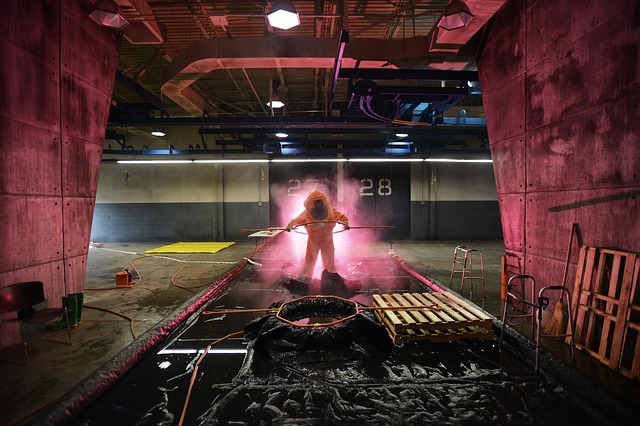
The packaging for individual parts will need to be removed and treated. A cardboard baler is one example that could work in your favour. Meanwhile, manufacturing processes will produce a lot of waste material too. Installing the best industrial water pumps should be high on the agenda too. When waste liquids can be removed safely and effectively, it aids the machines as well as the workspace.
In today’s climate, it’s important to dispose of waste in an eco-friendly manner. Not only for the sake of the planet, but also for the brand image. On a side note, this is a huge incentive to invest in LED lighting and other green upgrades for the factory spaces too. After all, effective waste removal is a little pointless if you are guilty of wasting energy.
#7. Create Links With Other Workspaces
Creating the most efficient factory environment is one thing, but it counts for very little if it doesn’t fit in with the rest of the company. There are important issues before manufacturing take place, such as the design phases. And there are important issues after. Smooth communication is essential.
The wonder of modern tech makes it easier than ever for factory managers and foremen to stay in touch with key personnel. Designers, shop floors, HR departments, and directors can all be reached via team messaging Apps. Meanwhile, adopting a real-time project management system can transform the entire operation. Teams will share greater transparency than ever before.
Internal success from the manufacturing team should remain the priority. Nonetheless, improved collaborations with external departments can only have a positive influence. It will lead to greater efficiency in regards to time and money. It also enables adjustments to production lines with immediate results.
#8. Keep The Factory Protected
Manufacturing factories might not seem like the most vulnerable business premises for burglaries. After all, it’d be almost impossible for thieves to remove your CNCs, lathes, or screen printers. On the contrary, though, there are plenty of valuables that could be at threat. You must prevent it.
The installation of a modern CCTV and alarm system is the first item on your checklist. Crucially, you must ensure that the building itself is protected. This can be achieved through shutters, padlocks, and other preventative tools. If forklifts and expensive materials like copper piping are kept outside, you may want to hire a security guard too. It’s a small price to pay for the added safety and emotional reassurance.
Having items stolen could disrupt productivity, cost money to replace, and compromise safety. While the right business insurance will put a safety net in place, it’s better to avoid these issues. If nothing else, preventing stressful situations can allow your team to focus on the jobs at hand. Frankly, they may be the greatest breakthrough of all.
The Final Word
A productive manufacturing plant gives your entire business model a better shot at success. Focus on safety, efficiency, organisation, staff requirements, and communication at all times. When those features are under control, the results are simply remarkable. Aside from aiding your team, it makes managerial challenges far easier too.
