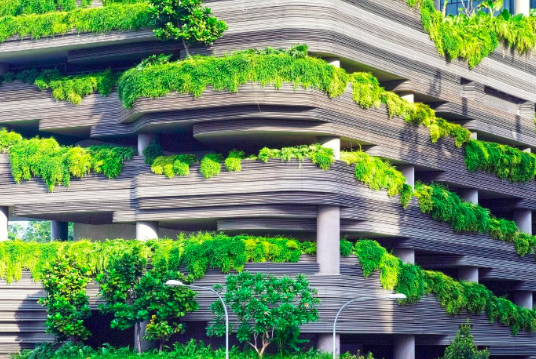
Did you know that concrete is an environmentally friendly material? When it comes to construction, concrete may not be the first product that comes to mind when you consider green or environmentally friendly projects. But constructing with concrete – particularly precast concrete – is actually sustainable as well as being highly resource-efficient.
Read on to discover how precast concrete and precast interlocking blocks can help a project meet green credentials.
1. Concrete is 100% Recyclable
Again, when you think of concrete you do not automatically think of it as being recyclable. But the components of concrete, which are sand, gravel, cement, and water, are all natural. Water is obviously natural. Sand and gravel occur naturally in the environment. And cement is made from limestone, sand, clay, and iron ore, which are natural materials. And as precast concrete is manufactured on-site, any unused fresh concrete can be immediately returned to the cycle of production and used again. This not only helps the environment but also helps the budget. Precast concrete blocks can also be used again in other projects following the demolition of a building.
2. Precast Concrete Minimises Energy and Water Consumption
Since the process of creating precast concrete is controlled by computer, the precise proportions of materials, as well as the minimum energy, can be calculated in order to reduce waste and optimally utilise materials. The process of making precast concrete generally uses less water and less electricity than traditional processes.
3. Precast Concrete Reduces Waste and Packaging
There is only a small amount of waste involved in the process of constructing precast concrete since the process is controlled by computer. As described above, unused fresh concrete can easily be returned to the production of new concrete. And the process uses less packaging – the precast interlocking blocks are transported to the site without packaging, whereas the materials for casting concrete on-site are all inevitably packaged.
4. Precast Concrete Protects the Environment
Using precast concrete blocks helps protect the environment from toxic elements. Precast concrete forms a barrier to store these toxic substances so that they do not interact with the environment and cause harm. Precast concrete blocks can also be used as fire barriers and breaks, thereby protecting the environment from fire damage.
5. Precast Concrete Insulates and Sound-Proofs
Precast concrete also contributes to making buildings greener and more sustainable. The concrete makes a building easier to insulate and sound-proof so that the impact of a building on the environment is kept to a minimum. Concrete can be used to create green building projects like sustainable housing and agricultural buildings.
When choosing a construction material, precast concrete remains a viable option for a green alternative. Precast concrete is a good choice for sustainable building design when combined with other environmentally friendly materials. The minimal waste and use of resources mean it keeps a project’s environmental footprint small.