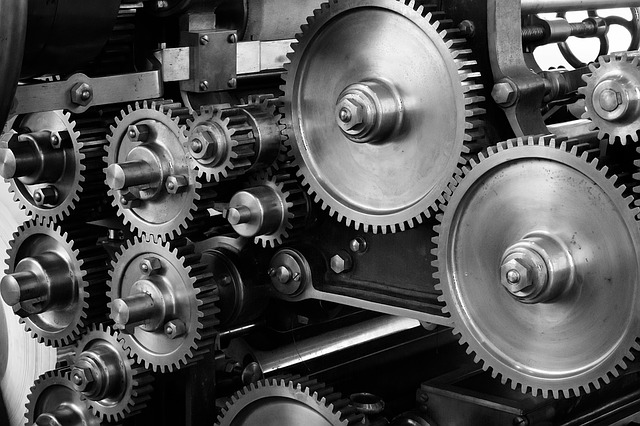
Bearing failure can be exceptionally frustrating, as it can result in a costly repair, or, even worse, a machine replacement. This is why it is imperative to take the necessary steps to prevent this from occurring. To do this, you need to be aware of the various reasons why bearings fail prematurely, from improper mounting to a lack of lubrication. You can then know what actions to take to stop bearing failure. In this post, we are going to reveal five of the best approaches, so continue reading to discover all you need to know.
- Proper lubrication – There is only one place to begin, and this is by ensuring that your bearings are lubricated properly. There are many different lubrication failures, which can in turn cause the bearing to breakdown. This includes the following – using the wrong type of lubricant, insufficient lubrication, using too much lubricant, contamination of the lubricant, mixing of grease/oil, and excessive temperatures that result in the degradation of the lubricant. Thus, to prevent bearing failure, you need to ensure you use the right lubricant and the correct amount.
- Maintain the correct radial internal clearance (RIC) – Not only do you need to be aware of the RIC, but also you must ensure that you maintain the correct radial internal clearance that was established in the original design. This is imperative so that there is an allowance for changes in the likes of heat, shaft fit, and lubrication.
- Ensure clean work surroundings – You need to ensure that you handle bearings in the correct conditions at your business. Here are some tips – keep lubricants clean when applying them to bearings, keep bearings in their packages until they are ready to be installed, handle with dry and clean hands, work with clean tools, treat used bearings just as you would new ones, use clean and lint-free rags to wipe the bearing, use flushing oils and clean solvents, and, finally, lay the bearing out on clean paper and cover to ensure it does not end up dirty.
- Mount and install bearings correctly – One of the biggest reasons for bearing failure is because the bearing has not been mounted or installed properly. Not only do you need to use the correct tools, but you also need to verify the housing and shaft tolerances. You will create too little preload if the fit is too loose while too much preload will be generated if the fit is too tight. Thus, finding the right balance is imperative.
- Store the bearings correctly – Finally, you need to make sure all bearings are stored correctly. You should never store them directly on concrete floors. This is because water will condense, and it will then collect on the bearing. You also need to make an effort to ensure the bearing does not corrode or rust, which can occur even if a small amount of chemical or moisture is left on an unprotected area. A lot of firms use a protective coating to combat this problem. Moreover, it is advisable to store bearings on a shelf or pallet in an environment without a lot of sudden temperature changes or humidity. If you do this, make sure you have a good pallet management strategy in place, which should involve pallet recycling and reusing.
How to measure bearings to determine the correct type for a replacement
Nowadays, when you purchase a bearing you will find that it usually has a laser stamp on it, so you can identify what type of bearing it is. However, it only takes a little bit of general wear and tear for this stamp to rub off quickly. Luckily there is another method that will help you to determine what type of bearing you have, and this is to measure the bearing. Keeping that in mind, read on to discover all you need to know about measuring bearings to decipher the correct type.
To measure the bearing you should use a vernier calliper. You could use a ruler if you don’t have access to this tool, but you need to be sure that you measure to the highest level of accuracy. You will have to determine the width, the outside diameter and the inner diameter of the bearing. Once you have done this, you will then be able to correlate your findings with the information that is available regarding bearing types and their correct sizes. You have three main bearings you will be trying to distinguish between – ball bearings, roller bearings and needle bearings, with the latter, essentially being a smaller version of the roller bearing.
You will find the bearings are often referenced by the three dimensions that have been mentioned, i.e. inner diameter x outer diameter x width. So, let’s take a look at how to measure these three aspects. The width and outer diameter are easy to measure. All you need to do is place the bearing in the jaws of the calliper and close it until it fits securely but make sure it is not too tight. You will then be able to take the value reading from the vernier calliper. When it comes to the inner diameter, you will need to insert the outer anvils of the calliper into the bore. Once you have done this, open up the calliper until it is a secure fit; again making sure it is not too tight. Now read the value on the calliper and you have the inner diameter too.
You don’t only need to be aware of the dimensions but there are also suffixes in place as well. This refers to the shields or seals that come complete with the bearing. ZZ or 2Z can symbol that there are two metal shields, whereas DDU, 2RSR and 2RS1 indicate that there are two rubber seals. In addition to this, there is also a clearance value for every bearing, which supplies the bearing with room to expand between the bearing races. It will add a little amount of play in between both of the rings. The clearance symbols are as follows – if there is no marking then the bearing has a standard clearance, if the clearance is less than international standard it will be marked with C2, if the clearance is greater than international standard it will be a C3, and finally a C4 is the biggest of them all, indicating a clearance that is larger than C3. When is this important? Well, you will often find that if the bearing has a chance of getting hot then you will need a more substantial clearance; this is because the heat requires room to escape. If you were to go for a smaller clearance, then there would be a high chance of bearing failure.
