Technology has always driven business, and that is very much the case in the 21st century. This is why some jobs are fading out of existence, while others are becoming more prevalent and desirable.
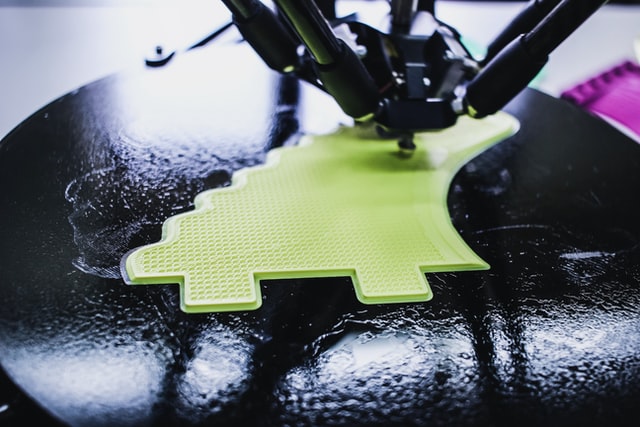
One of the kinds of technology that has gotten a lot of attention from the media is 3D printing. It has many potential uses, both in the home and in a workplace setting. For some ways that 3D printing is creating new business for companies, read on.
The Direct-to-Consumer Business Model
When you discuss things like 3D printing and prototyping, what you are talking about more than anything else is convenience. 3D printing has allowed something called the D2C business model to grow widespread in recent years.
3D printing cuts out the middle man. Companies that adopt this model can create components cheaper and faster than what was once possible through mass-manufacturing.
With traditional manufacturing, there were certain efficiency and quality goals that businesses would consider to be realistic. Those numbers are meaningless when a company has a 3D printer.
The way this creates new business is that investors will be eager to get on board with a business model that uses D2C. They know that manufacturing can take place for a fraction of the price, and it will happen much more expediently.
The Era of Customization
Another way that 3D printing is bringing about new business for companies is through the way that they can customize products. At one point, items rolled off an assembly line. Those products came from a particular mold, and changing any aspect of it was time-consuming.
You need not concern yourself with that when you use 3D printing. If a business partner wants a customized product, it is the work of a few moments to give that directive to the 3D printer.
A customized, personalized product is appealing to many brands and individuals. Think of how much money sneaker enthusiasts will pay for a rare set of Nikes. Now, consider customized models of different products that companies can make when they invest in a 3D printer.
You can easily customize:
- Toys
- Clothing
- Kitchenware
- Jewelry
The list goes on and on.
Consolidating Your Supply Chain
Problems with company supply chains is a particular concern at the moment, but that was true even before the pandemic. You might run into supply chain problems like:
- Misplacing boxes of goods
- Trucks and planes running late
- Unreliable drivers or pilots
None of that is an issue with supply chain consolidation. When you have 3D printers, you can make so many more of your critical components in-house. All you must worry about then is storage.
Aside from that, the design of 3D printing is such that it runs using complex geometries. Without those abilities, you would have to set up a product assembly line that would require many more parts to function correctly.
MaaS
There is also an aspect of 3D printing called MaaS, which stands for manufacturing as a service (not to be confused with mobility as a service). Shared equipment and infrastructure enable more efficient production.
Using the MaaS system, a customer could put in an order for a part they need for one of their products. A network will dynamically route the order, based on factors like location, scale, workforce availability, and materials.
3D printing is a digital manufacturing technology, and, as such, companies set it up to aid in this sort of business model. 3D printing can print parts from a digital file, and most of the workflow is data-driven.
MaaS, along with 3D printing, can provide access to a technology range that was impossible not long ago. Companies can turn more to digital manufacturing, which saves time, money, and dispenses with a labor force that is increasingly becoming obsolete.
These are only some of the ways that 3D printing is changing the face of manufacturing in many different industries. 3D printing means on-demand manufacturing for many components and products. This makes a lot more sense than producing hundreds or thousands of a product without any certainty a store will need that number.
3D printing allows many companies and industries to strike a balance between demand and supply. The sophisticated algorithms that businesses once used aren’t applicable anymore, or they aren’t using them as much. That is because they can contact a manufacturer with a 3D printer at any time and say, “I need X number of products” when one of their store locations calls in the order.
